
Warning signs taken seriously
A persistent burning, hot-plastic or fishy smell, crackling, unusual heat or circuits suddenly failing can indicate a developing electrical fault. They should not be masked or left to see whether they disappear.
Anonymous home-safety case study
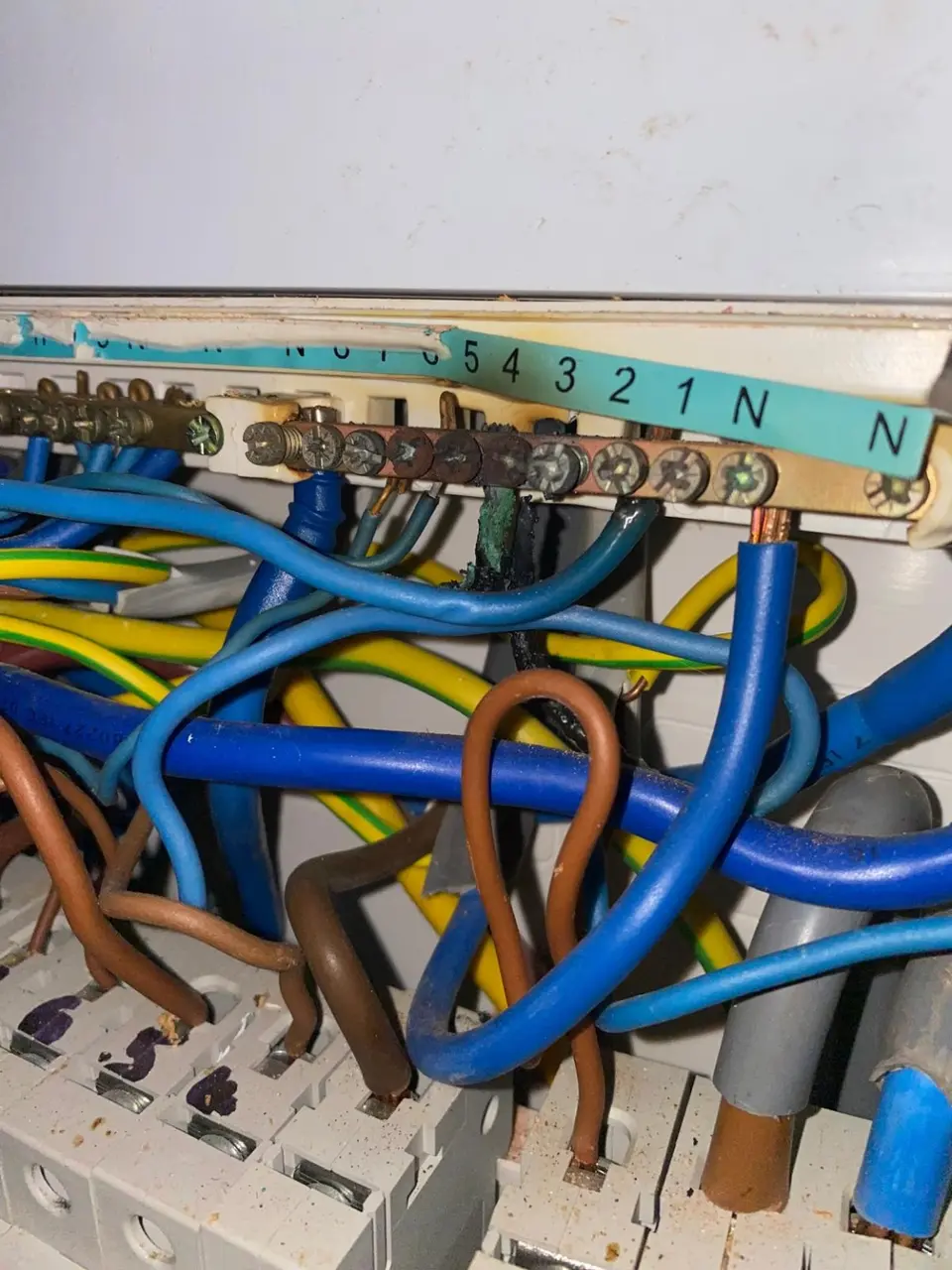
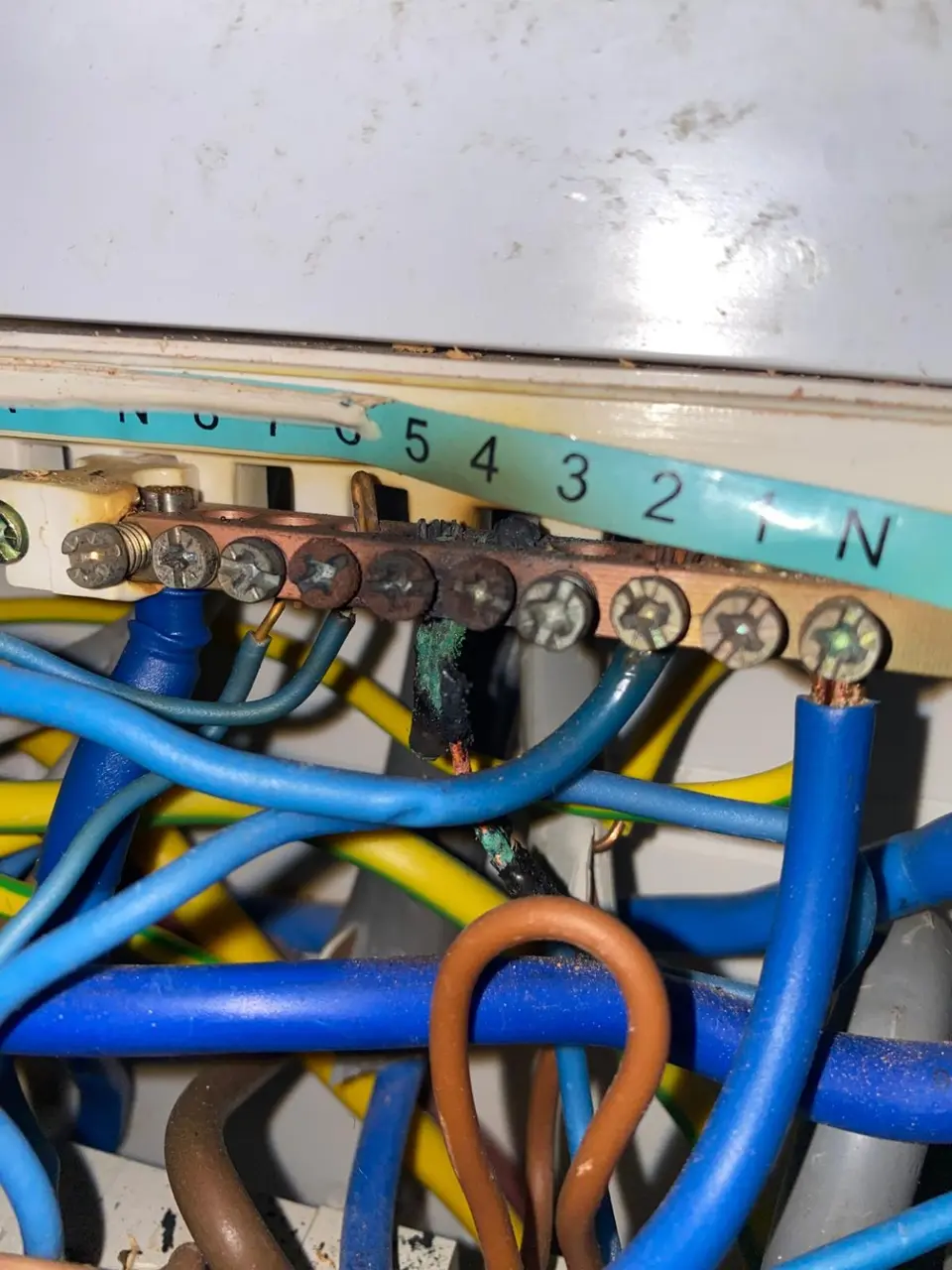
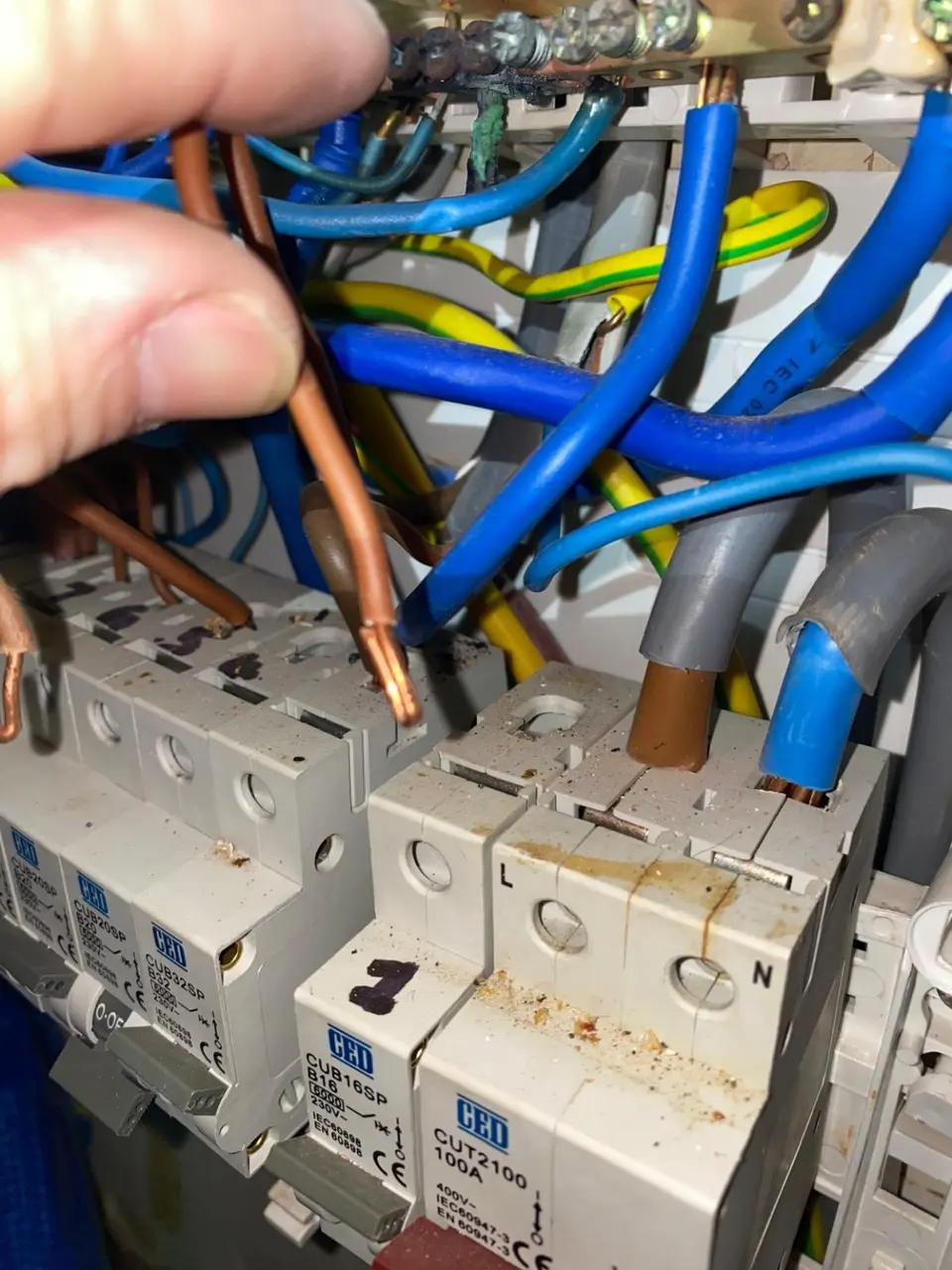
The customer asked for a second opinion after noticing a burning smell and sockets that had stopped working. A thorough EICR found severe overheating damage and a circuit conductor that was not secured in its protective device.
What the inspection found
The customer reported that another EICR had been completed in January and that the visit had been very brief. By April, a burning smell and sockets losing power prompted a request for the installation to be checked again.
Inspection inside the consumer unit revealed extensive heat damage around connections, visibly degraded insulation and a circuit conductor that was not secured in its terminal. These photographs show the effects of overheating; establishing the initiating cause and the full extent of a defect requires inspection and electrical testing, not a photograph alone.
The consumer unit was under the stairs with stored belongings around it. Keeping combustible items away from electrical intake equipment cannot prevent an electrical fault, but it can reduce the material available to feed a fire and makes warning signs easier to notice.
Why a proper EICR matters
A meaningful condition report takes time. It combines safe isolation, inspection, electrical measurements, recorded limitations and clear findings for the customer.
A persistent burning, hot-plastic or fishy smell, crackling, unusual heat or circuits suddenly failing can indicate a developing electrical fault. They should not be masked or left to see whether they disappear.
With the installation safely isolated, the consumer unit and accessible connections can be examined for loose conductors, overheating, damage, contamination and unsuitable alterations.
An EICR combines visual examination with circuit measurements and protective-device tests. Results are interpreted against the circuit, device and test conditions rather than treated as isolated numbers.
Photographs help the customer understand what was found. The written report records observations and codes so urgent defects, further investigation and recommended improvements can be separated clearly.
Explore related pages
Smell burning or losing power?
Do not remove the consumer-unit cover. If there is smoke or fire, get everyone out and call 999. Otherwise, switch off only if it is safe to do so and arrange urgent electrical advice.