
Fault traced in the loft
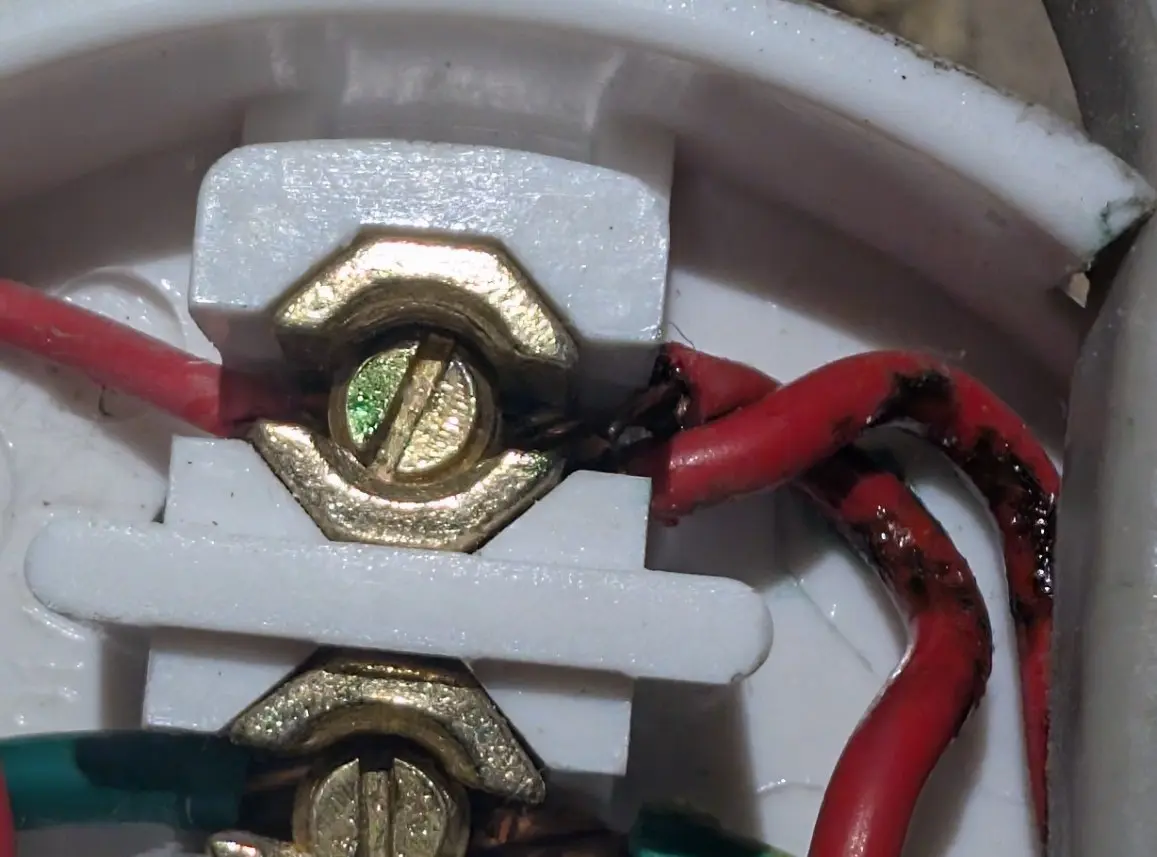
Inspection located blackening and heat damage around a loose line connection rather than relying on guesswork at the visible light fittings.
Finchfield lighting fault-finding case study
Intermittent flickering, dimming and loss of lighting led to a methodical investigation of the fixed lighting circuit. A loose connection had overheated in the loft, while further inspection also revealed exposed historic joints, green plasticiser migration and older rubber-insulated wiring.
What the investigation found
The customer reported lights flickering and dimming, a bedroom light failing to operate and dining-room lighting that had stopped working intermittently before returning. The whole-house lighting supply was found to be arranged as a single circuit.
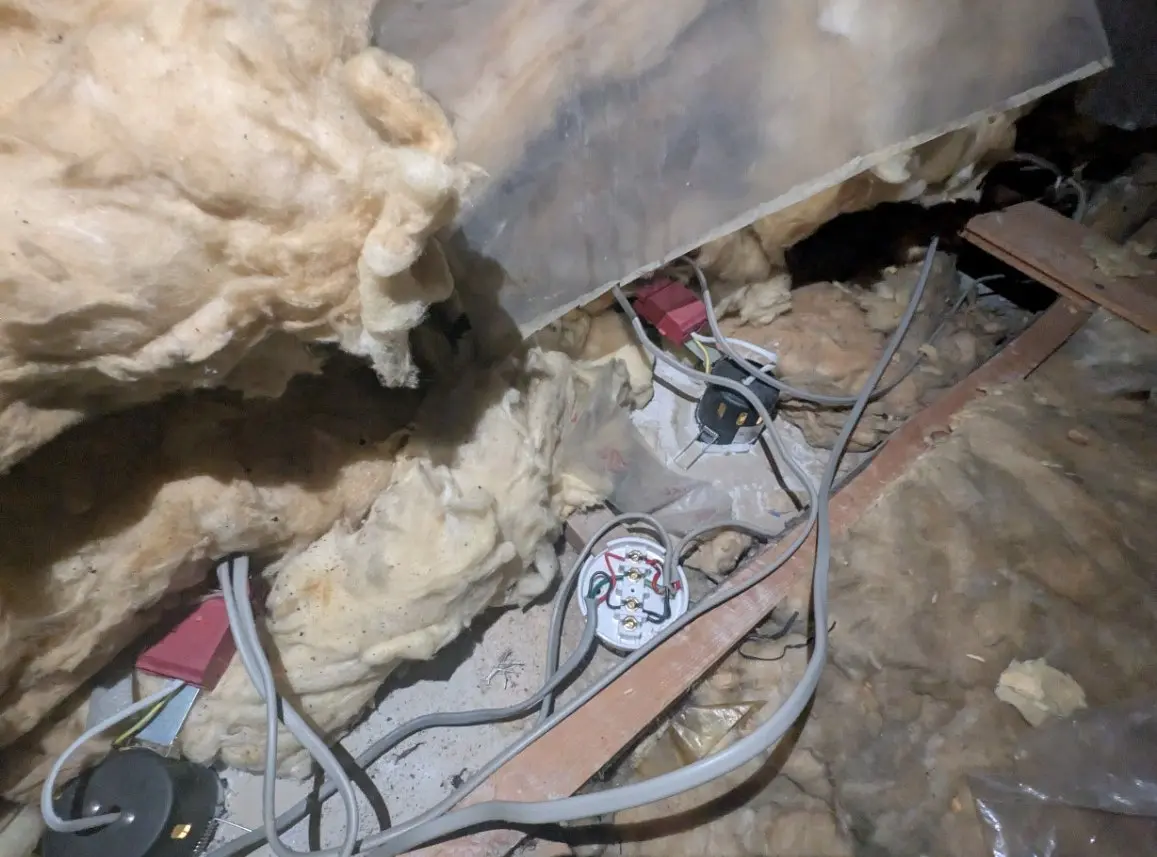
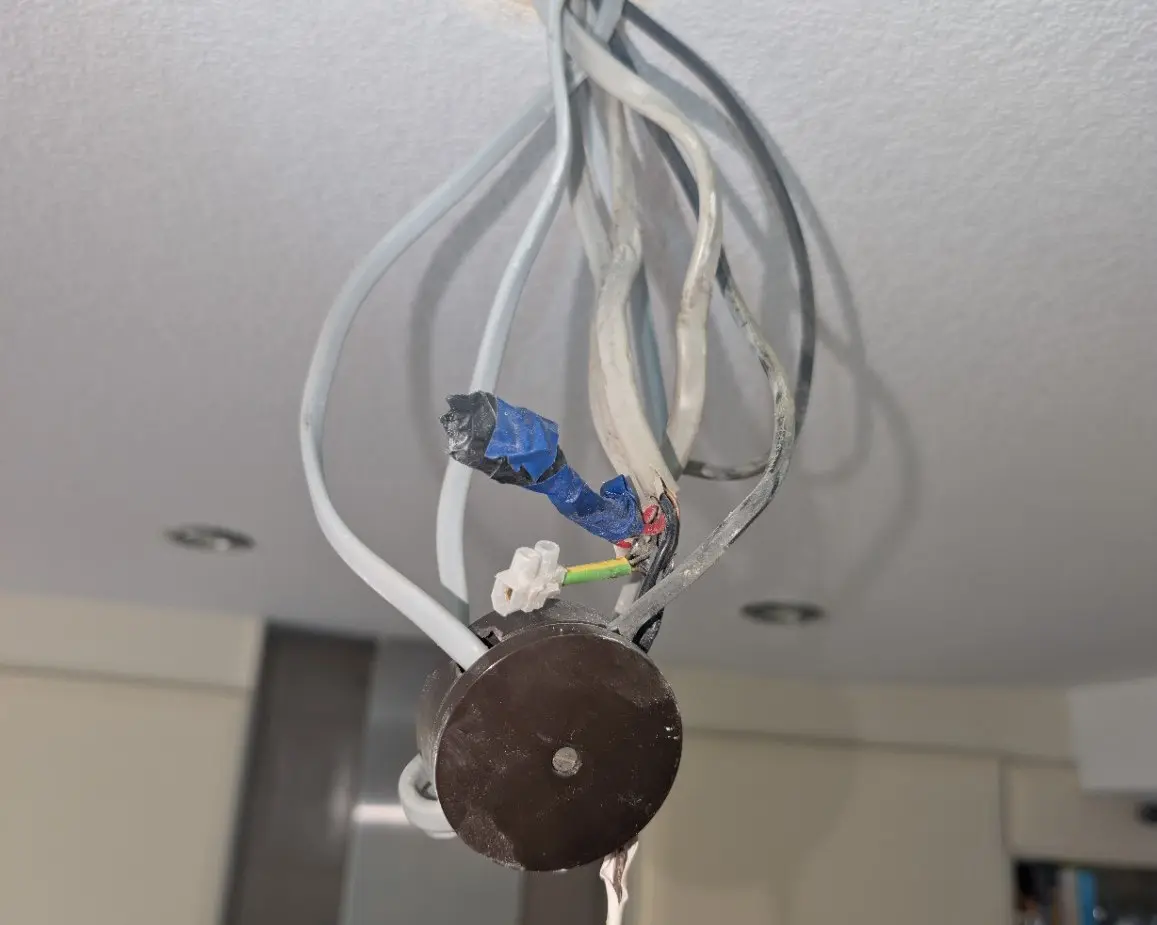
Investigation in the loft found visible blackening and heat damage at a line connection. The damaged cable was cut back to sound insulation and reterminated correctly. The cause was a loose, high-resistance connection capable of producing intermittent dimming, flickering and loss of lighting.
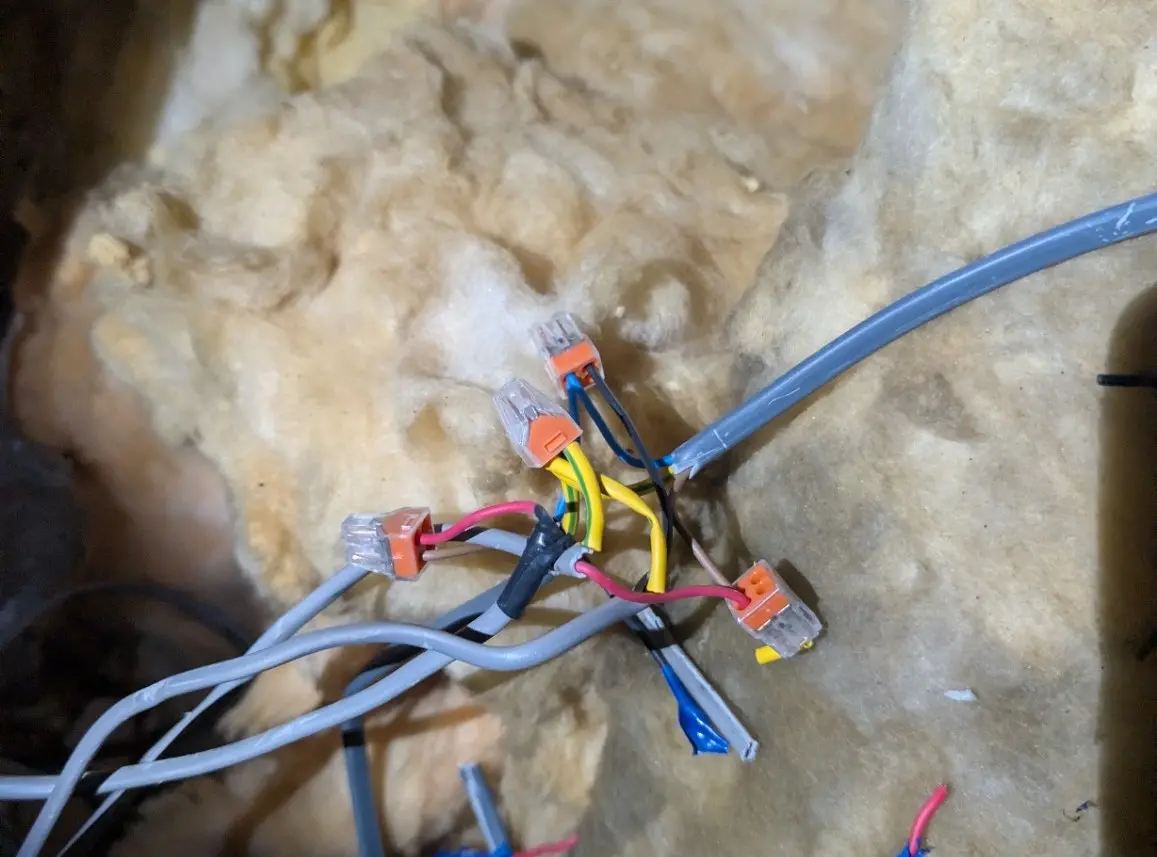
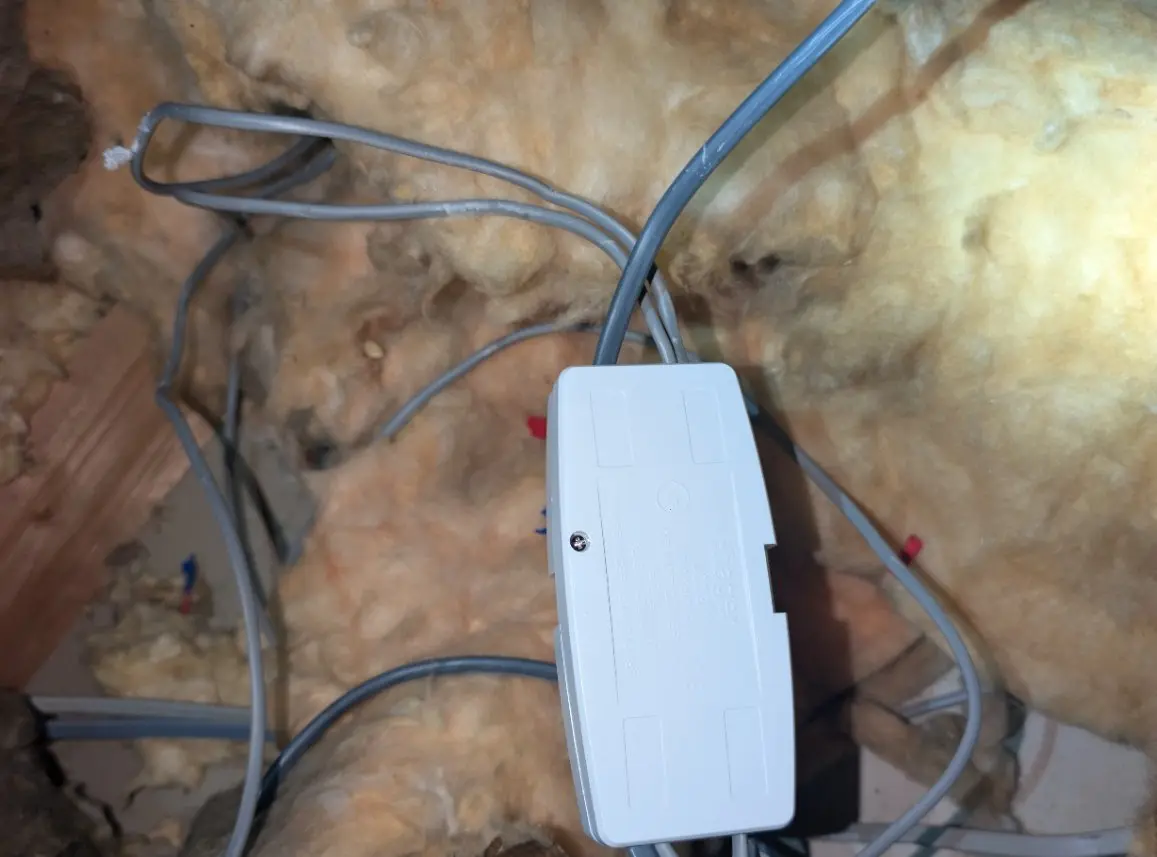
A separate group of exposed lighting connections within the loft insulation was reorganised and reterminated, then enclosed within a suitable maintenance-free junction box. The circuit was restored and electrical checks were repeated after the remedial work.
Green plasticiser migration was present on sections of older PVC lighting cable. Older rubber-insulated wiring had also been historically joined to newer PVC cable at the kitchen lighting point. Because of the age and condition of parts of the wiring, the historic alterations and the heat-damaged connection, a full EICR was recommended to assess the wider installation.
For homeowners in Wolverhampton, this is a useful distinction between fault-finding and an EICR. The visit was focused on the reported lighting problem and the immediate defects found while tracing it; recommending a full condition report meant the rest of the installation could be assessed separately rather than assuming one repaired fault represented the condition of the whole property.
How the fault was addressed
Intermittent faults need inspection, appropriate testing and a clear record of what was repaired and what still warrants wider assessment.
Inspection located blackening and heat damage around a loose line connection rather than relying on guesswork at the visible light fittings.
The heat-affected section was cut back to sound cable and reterminated correctly so the damaged connection was not left in service.
A separate group of historic connectors left within the loft insulation was reorganised, reterminated and enclosed in a maintenance-free junction box.
Continuity and functional checks were completed, the lighting circuit was restored and the customer received a photographic fault-finding and remedial report.
Green plasticiser migration and older rubber-insulated wiring joined to newer PVC cable were recorded so the wider condition could be considered properly.
The targeted visit addressed the lighting fault, but it was not presented as an inspection of the entire installation. A full EICR was recommended as the appropriate next step.
Lights flickering or dimming?
Flickering, dimming, burning smells or lights repeatedly failing can indicate a loose or overheating connection. Stop using affected equipment if there are signs of heat, smoke or damage and arrange professional fault finding.