
Know the controls
Five labels you may see behind the normal flap.
Provides a way to isolate the consumer installation. Some separate equipment may have its own isolation.
A miniature circuit breaker responds to overload and short-circuit current.
A residual current device may protect a group of circuits and normally has a “T” or “Test” button.
Protects an individual circuit against both overcurrent and residual current.
A surge protective device helps protect the installation and equipment from transient overvoltage.
Real consumer-unit examples
Different layouts can provide very different levels of protection.
These are genuine consumer units encountered during SL4 work. The front labels and test buttons can help identify the general arrangement, but a photograph cannot confirm that the wiring, connections or protective devices operate correctly.
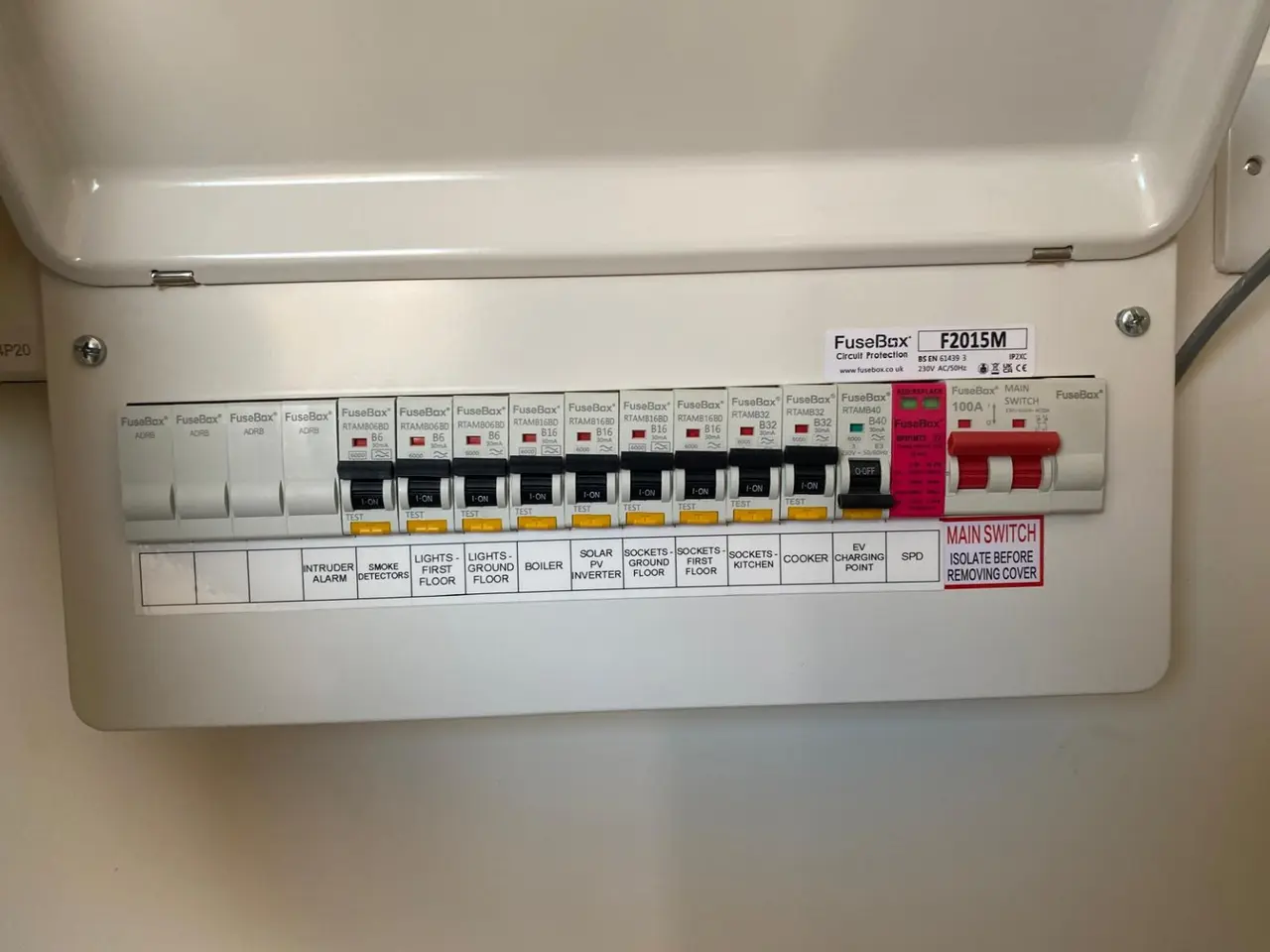
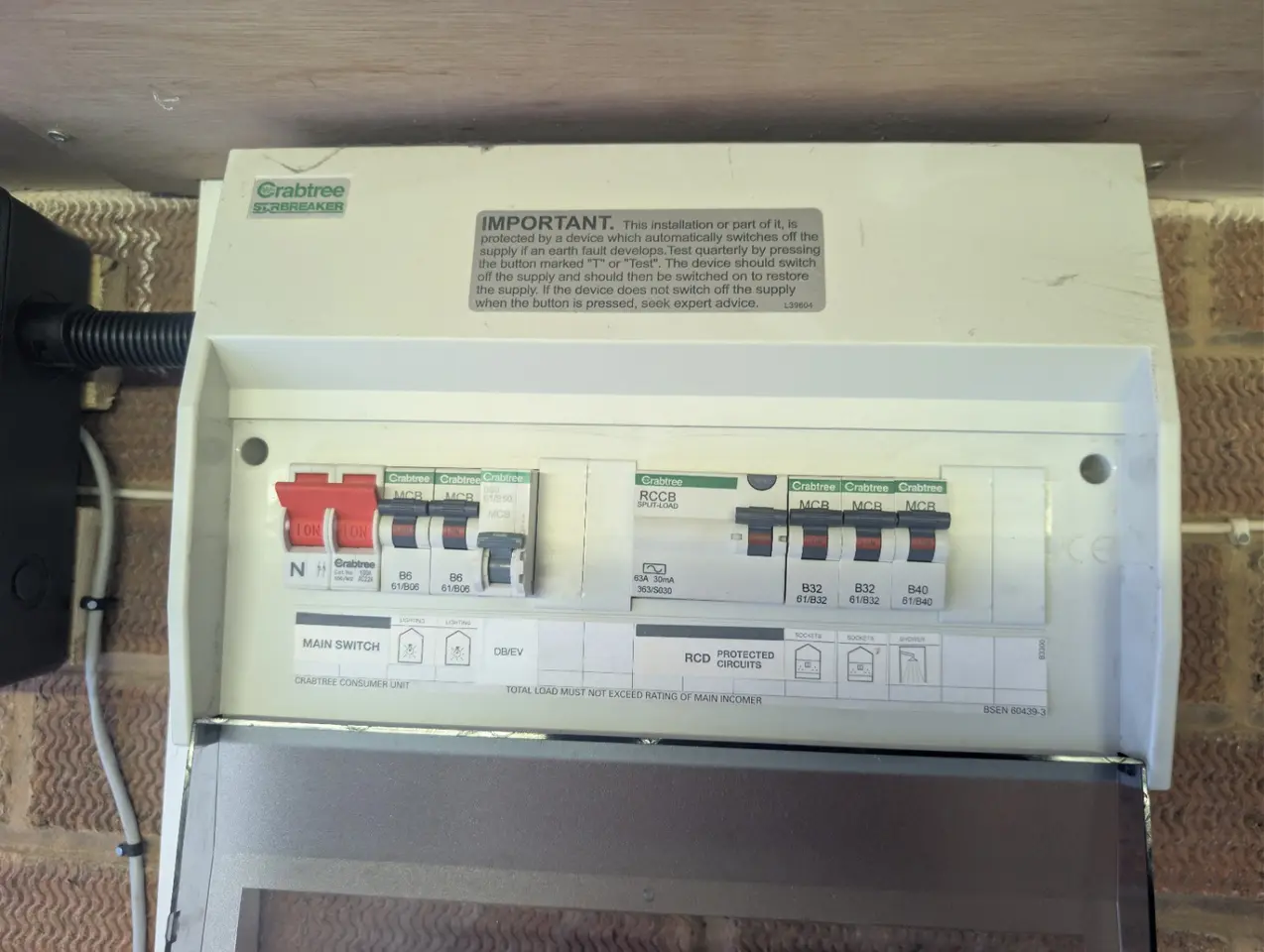
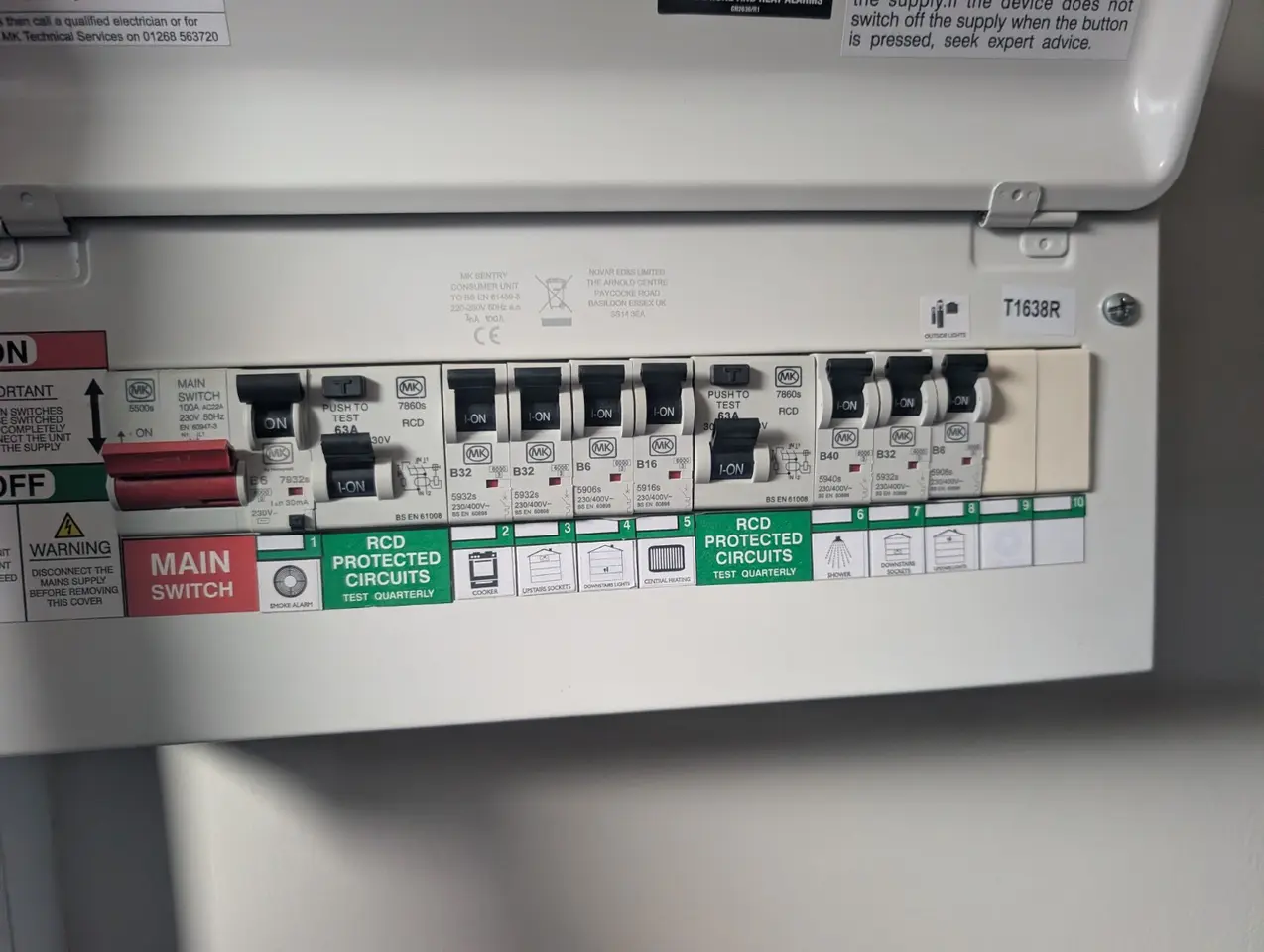
Look only through the normal user flap. Never remove a screwed cover. Internal parts may remain dangerously live even when a switch appears to be off.
If something trips
A protective device switching off is information—not an inconvenience to defeat.
- 01Look and smell before touching the switchesIf there is smoke, burning, scorching, crackling or unusual heat, keep away and treat it as urgent.
- 02Identify what has switched offUse only the normal user controls and labels. Never remove the screwed cover.
- 03Disconnect a suspect appliance if safeIf the problem began when an appliance was used, unplug it only when there is no damage, heat or immediate danger.
- 04Do not keep resetting itIf it trips again, will not reset or the cause is unclear, leave the affected circuit off and arrange fault-finding.
Never tape, wedge or hold a protective device in the on position. Do not replace a fuse with a higher rating or bypass an RCD.
Safe visual checks
What you can check without opening the unit.
See labelled examples of an MCB, RCD, RCBO and common consumer-unit layouts →
Old does not answer the question
Condition and protection matter more than colour alone.
A plastic enclosure, rewireable fuses or a unit with limited RCD protection may indicate an older design, but a photograph cannot establish the condition of the connected wiring or confirm that a full replacement is required. An inspection considers the complete installation and any planned work.
If the unit is damaged, has no identifiable RCD protection, regularly trips or has no reliable inspection history, ask for an assessment rather than waiting for a failure.
Common questions
What homeowners usually ask.
Does an old fusebox automatically mean the house needs rewiring?
No. Age or appearance alone does not prove that a full rewire is required. An EICR can assess the wiring, earthing, protective devices and overall condition, then separate safety defects from recommended improvements.
Why does a breaker keep tripping?
Possible causes include a faulty appliance, damaged wiring, moisture, an overloaded circuit or cumulative leakage. A single reset may restore power, but repeated tripping needs investigation rather than repeated resetting.
Can I remove the consumer-unit cover?
No. Only open the normal hinged flap intended for the user. Never remove a screwed front cover or touch internal parts; dangerous live components may remain present even when switches are off.