
The simple explanation
Earthing helps a fault switch off quickly.
If a fault makes exposed metalwork live, the earthing path allows fault current to flow through a protective conductor rather than relying on a person to become the path. That current should make the appropriate fuse, circuit breaker or RCD disconnect the faulty circuit.
The earthing arrangement is a complete system. Seeing one green-and-yellow conductor does not prove that the path is present, continuous or capable of operating the protective device correctly.
The other half
Protective bonding reduces dangerous differences in voltage.
Metal services entering a building can sometimes introduce a potential from outside the electrical installation. Main protective bonding connects relevant services to the installation’s main earthing terminal so that metal parts which might be touched together are less likely to sit at dangerously different voltages during a fault.
Helps the circuit’s protective device disconnect when exposed metalwork becomes live.
Connects relevant incoming metal services to the main earthing terminal where required.
Additional local bonding may be present where the installation design and wiring rules require it.
Illustrated examples
Where bonding conductors may be visible.
These examples show the principle, not a position to copy. Pipe material, service arrangement and the installation design determine whether bonding is required and where it should connect.
Appearance varies: green-and-yellow conductors, labels and clamps are useful clues, but a clamp can be loose, connected in the wrong place or electrically ineffective. Only inspection and testing can confirm the arrangement.
Correct real-world examples
What secure gas and water bonding can look like.
These photographs show correctly secured connections found in real properties. They help homeowners recognise the usual clues, but the precise requirement and connection point still depend on the service material and installation.
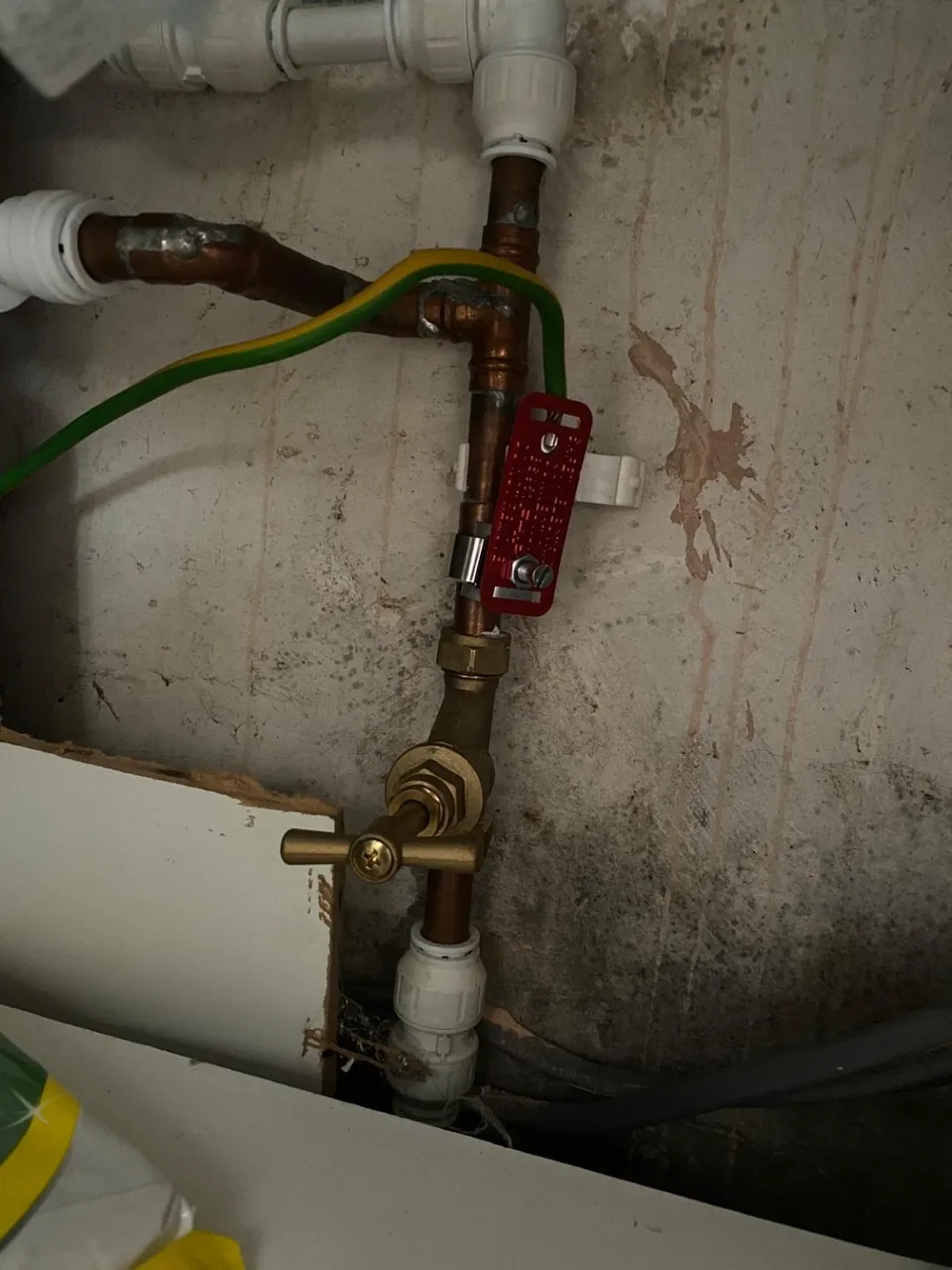
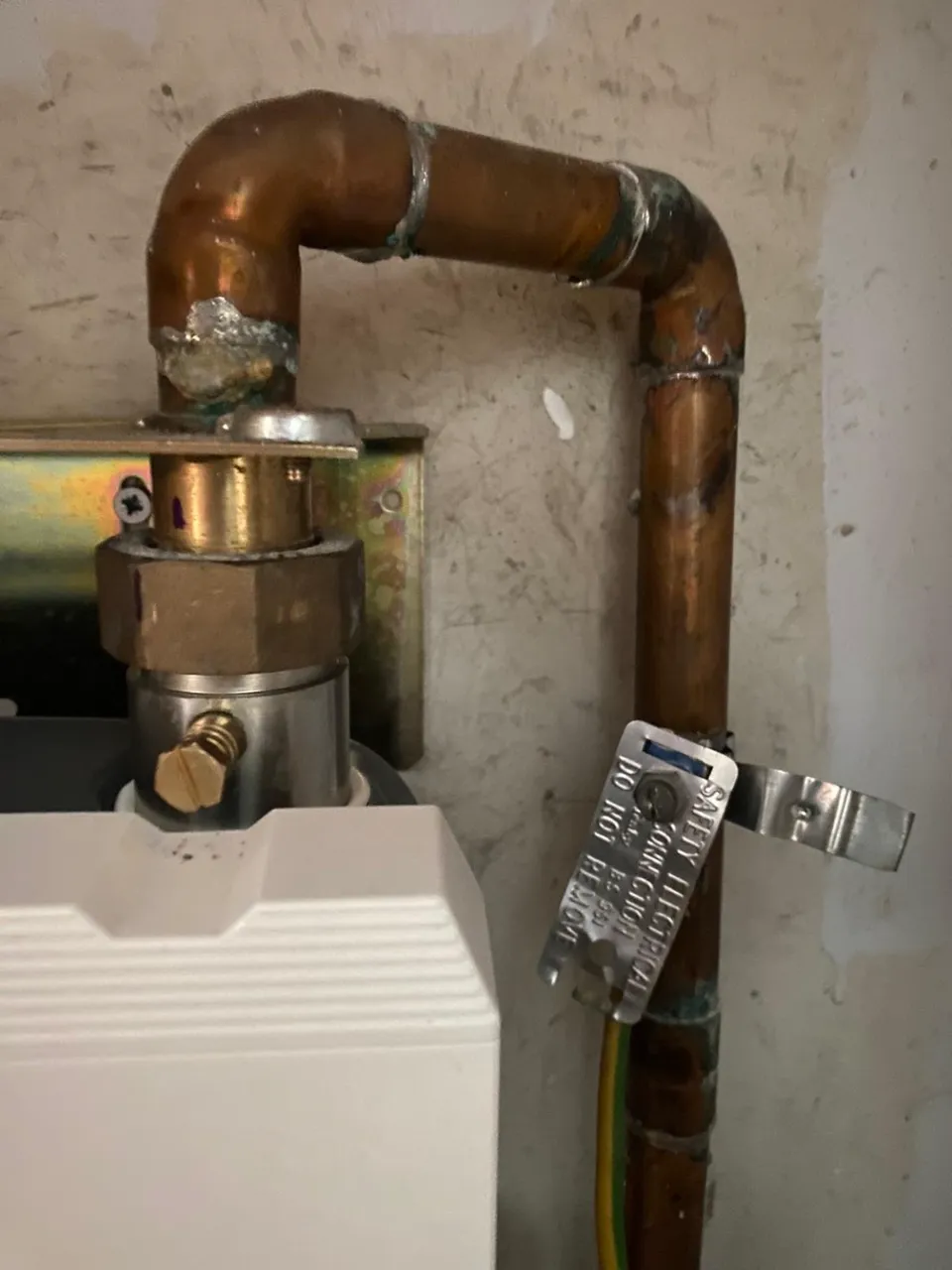
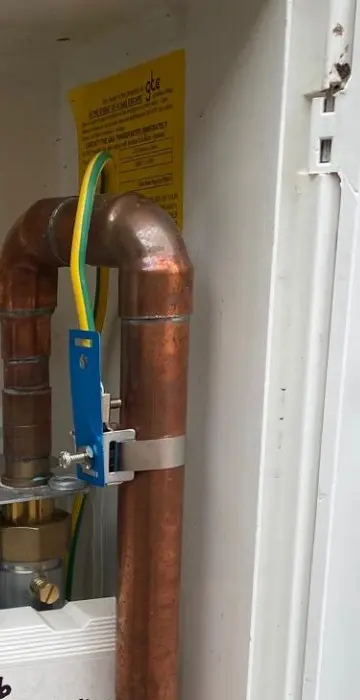
Correct-looking does not mean tested. A clamp can appear secure while having poor contact, an unsuitable position or no effective continuity back to the main earthing terminal. Electrical testing is still required.
Genuine SL4 inspection findings
Loose service bonding should never be ignored.
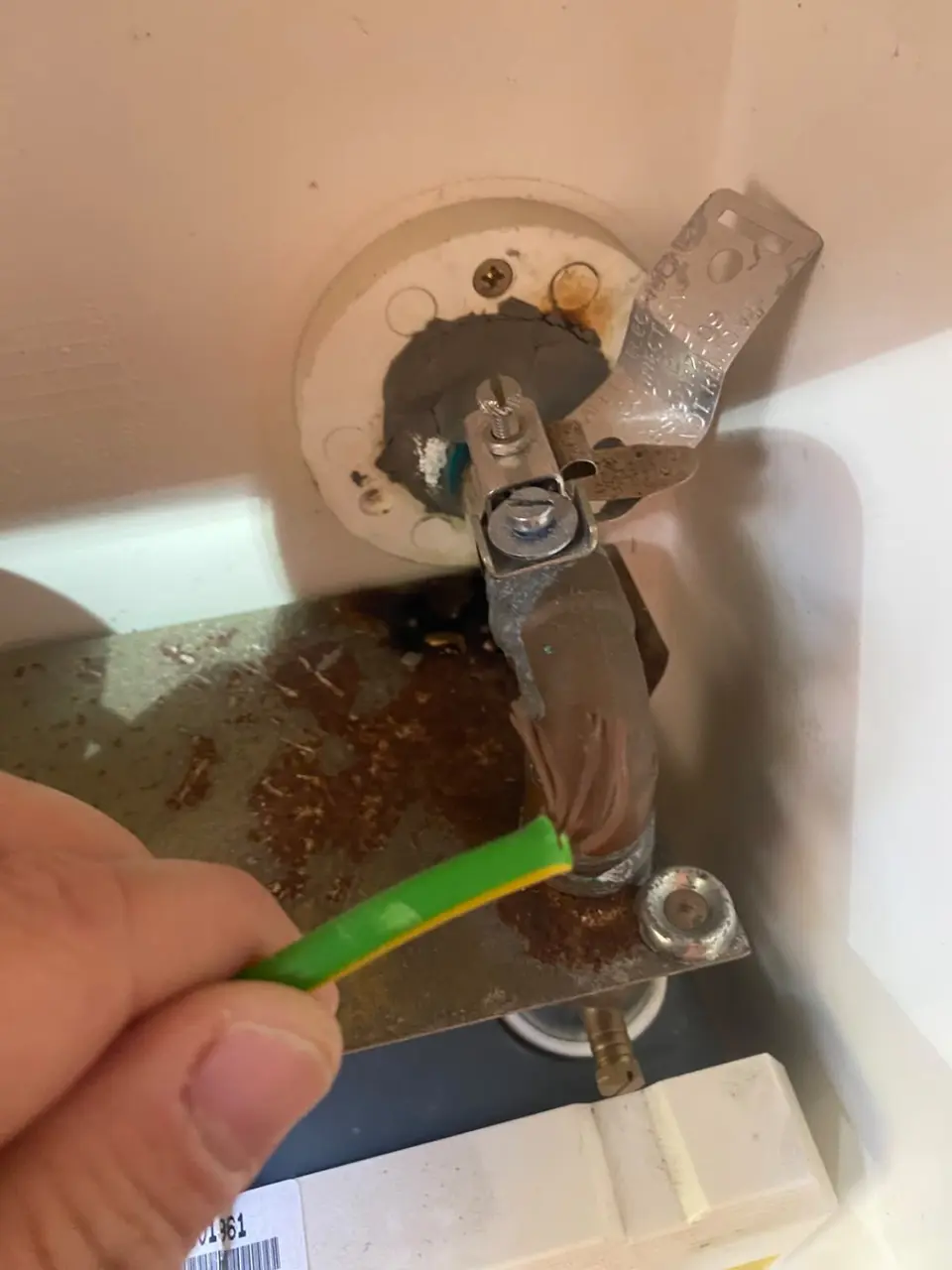
The clamp should be securely fitted around the correct metallic pipe and the green-and-yellow conductor should be firmly terminated under its screw. The conductor should never be loose, hanging free or able to pull out.
- Clamp: should sit firmly around the pipe, with no obvious gap or movement.
- Conductor: should be securely held at the clamp terminal, not loose or disconnected.
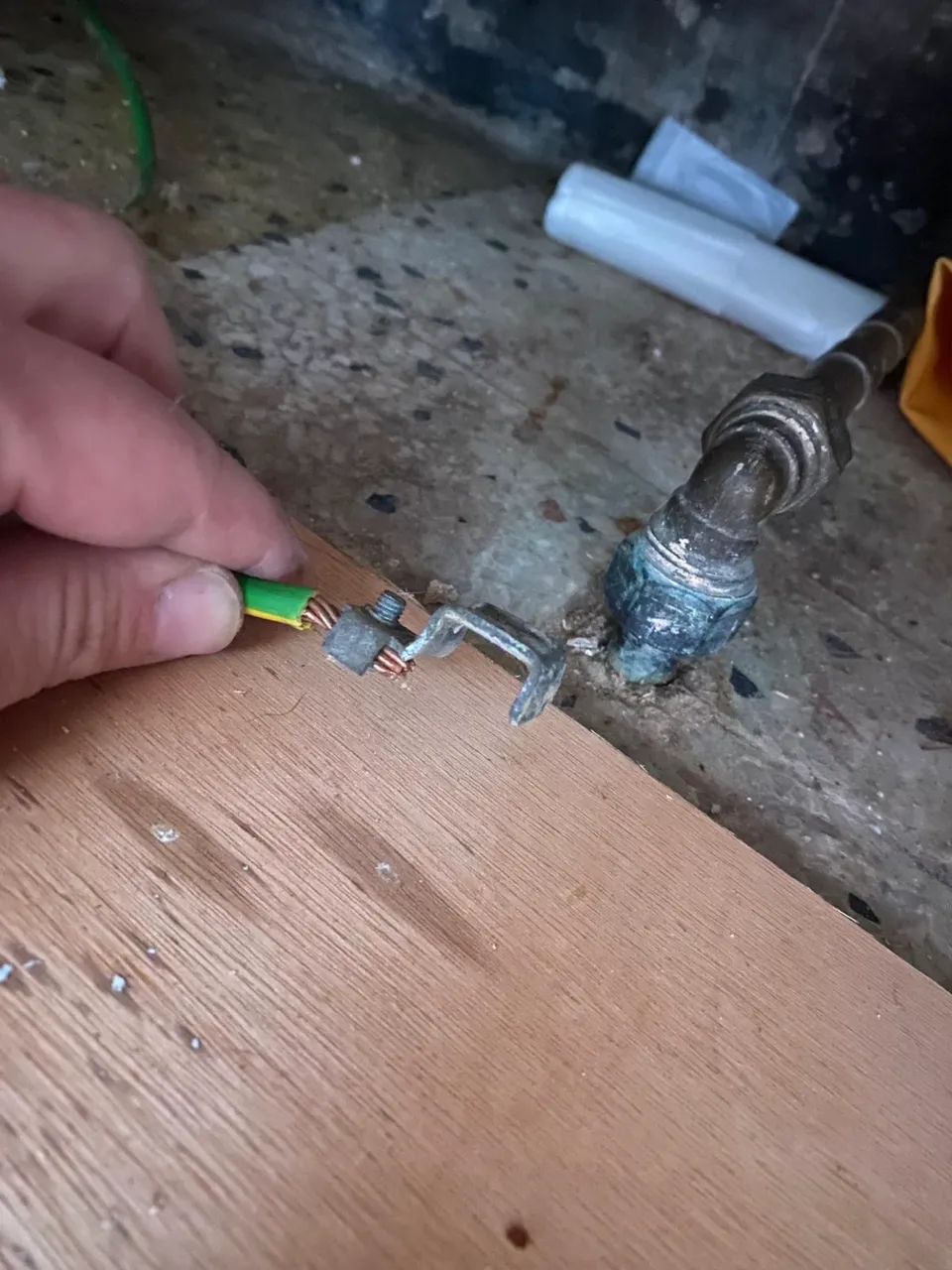
Here the complete clamp assembly has come away from the metallic water pipe. Where bonding is required, a disconnected clamp cannot provide the intended protective connection to the main earthing terminal.
- Clamp: is no longer secured around the pipe and has no effective metal-to-metal contact.
- Conductor: has visible copper strands and its condition and termination need checking before reconnection.
Real gas and water examples
What loose service bonding can look like.
These short clips show the bonding connections at gas and water services. In both cases the clamp should be secure around the correct metallic pipe and the green-and-yellow conductor should be firmly held at its terminal—not loose or able to pull free.
These checks are demonstrated by an electrician. Homeowners should look only. Never pull, test, tighten, remove or reposition a bonding conductor or clamp. If anything appears loose, leave it alone and arrange an electrical inspection.
A safe visual check
What can a homeowner look for?
Do not touch, loosen or move a clamp. Do not open the meter equipment or consumer unit. The correct location, conductor size and electrical continuity need to be checked by a competent electrician using test equipment.
Gas meter alterations
Has your gas meter been moved?
Moving a meter—commonly from inside the property to an outside box—can also change where the gas installation pipe enters the building. The old bonding conductor must not simply be left behind, extended without assessment or reconnected wherever it reaches.
A gas installer and electrician may both need to be involved. Gas work must be handled by a Gas Safe registered engineer. Electrical bonding should only be altered and tested by someone competent to carry out that electrical work.
When it should be checked
New electrical work relies on the existing earthing and bonding.
An electrician should confirm the arrangements before carrying out additions or alterations. They are also examined during an EICR, and should be investigated if a conductor appears damaged, a service pipe has been replaced or altered, the property has no reliable electrical records, or anyone has received a shock or tingling sensation.
Common questions
What homeowners usually ask.
Are earthing and bonding the same thing?
No. Earthing provides a path for fault current so a protective device can disconnect the faulty circuit. Protective bonding connects relevant metal services and parts to reduce dangerous voltage differences that could otherwise be touched at the same time.
Does every metal pipe need a bonding clamp?
No. The correct requirement depends on whether the service or metalwork can introduce a potential into the building, the installation design and the applicable wiring rules. A visual guess is not enough; an electrician can inspect and electrically test the arrangements.
Can I add or move a bonding clamp myself?
Do not loosen, remove or relocate earthing or bonding conductors. Their size, route, connection point and electrical continuity matter. Ask a competent electrician to check or alter them.
Does the bonding need checking when a gas meter is moved?
Yes. Relocating a gas meter can change where the gas installation pipe enters the building and may leave an existing bonding conductor in the wrong place, too short or disconnected. Where bonding is required, an electrically competent person should confirm its location, conductor size, secure termination and continuity after the alteration.