
The simple explanation
An EICR is an electrical health check for the property.
Lights can switch on and sockets can work while defects remain hidden. Loose connections, damaged insulation, ineffective earthing, incorrect protective devices and poor alterations may only become obvious when they cause a shock, fire or repeated tripping.
An EICR combines visual inspection with electrical testing. It records the condition at the time of inspection, any agreed limitations and observations that affect safety.
What is checked
More than the fuseboard.
Real electrical testing
The instrument reading is only one part of the result.
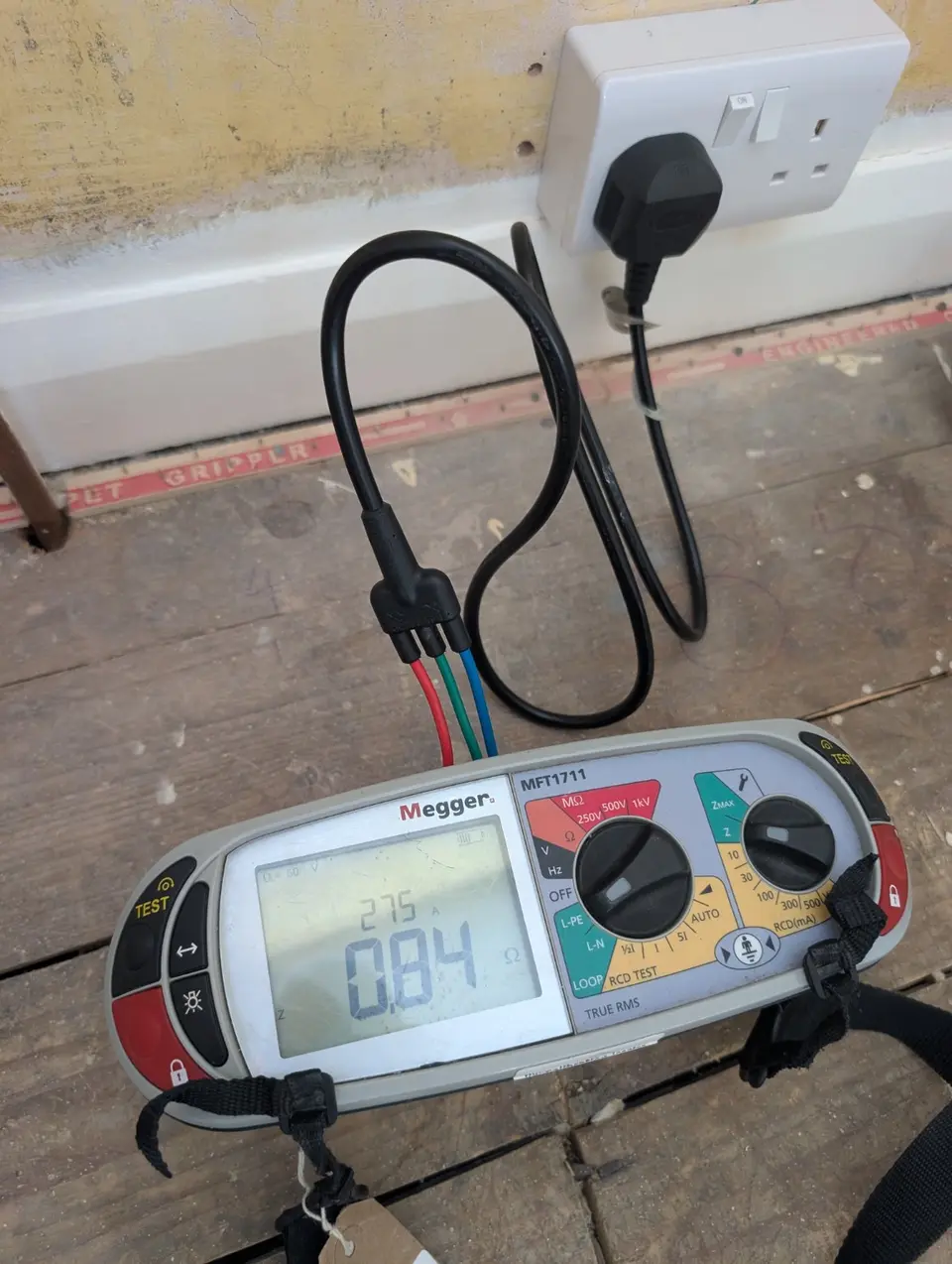
A multifunction tester is used for several measurements during an inspection. A displayed number is not a stand-alone pass or fail: the electrician must know which test is being carried out, the circuit arrangement, the protective device and the permitted value.
- Continuity and insulation: help assess whether conductors are complete and insulation remains effective.
- Fault-loop measurements: help confirm whether enough fault current can flow for protection to disconnect in time.
- RCD tests: measure whether residual-current protection operates at the required test currents and times.
See a real case where a burning smell and failed sockets led to serious consumer-unit findings →
How often
Condition matters—not only age.
Electrical Safety First recommends periodic inspection at least every 10 years for an owner-occupied home. Relevant rented homes in England must be inspected and tested at least every five years, or sooner if the previous report requires it. Inspection is also sensible when buying an older property, after major alterations, following damage or when no reliable history exists.
Landlord or housing provider? See the dedicated rental-property electrical-safety service →
Current standards
A newer Wiring Regulations edition does not automatically fail older wiring.
BS 7671 changes over time as electrical technology and safety requirements develop. Existing installations are assessed on their condition and safety; they do not automatically become dangerous or require rewiring simply because a newer edition has been published.
Read the plain-English guide to BS 7671 Amendment 4:2026 and the October 2026 changeover →
Understanding the result
The codes separate danger from improvement.
Danger presentImmediate action is required.
Potentially dangerousUrgent remedial action is required.
Further investigationSafety cannot be confirmed without more investigation.
Improvement recommendedAn improvement is advised but this code alone does not make the report unsatisfactory.
Common questions
Before arranging an inspection.
Is an EICR only for landlords?
No. Landlords have specific legal duties, but owner-occupiers also benefit from periodic inspection because fixed wiring and connections deteriorate, alterations accumulate and hidden defects may not affect day-to-day use until a fault occurs.
Does a satisfactory EICR mean everything meets the newest regulations?
Not necessarily. An existing installation does not automatically become unsafe because standards have changed. The report assesses whether it is safe for continued use and records improvements separately from dangerous or potentially dangerous defects.
Will the power be turned off?
Yes. Circuits need to be safely isolated in stages so electrical tests can be carried out. Sensitive equipment should be prepared and accessible areas agreed before the inspection.